|
Advanced Yoga Practices Plus
Lesson
24 - Does Meditation Cure Sickness?
(Audio) Dec 2, 2003 Q: If I am sick, will meditation help me get better?
A: It can, but it is a far better prevention than a
cure. As the nervous system becomes more balanced over time from a regular
routine of daily meditation, the body's immune system functions much more
efficiently, and there is far less chance of falling sick. Other advanced yoga
practices we will be discussing here will further enhance the body's resistance
to illness.
In our Western culture, we tend to think in terms of fighting disease when it has come upon us after months and years of unhealthy living, rather than cultivating a state of balance within ourselves in advance that will practically nullify the occurrence of disease. No doubt, achieving good prevention through balanced, healthy living is the best course of action. But if we get sick, meditation can help us there too. If you are bedridden, meditate as much as is comfortable, alternating with sleep periods. Be very relaxed about it, leaning back on a pile of pillows. Meditation will help the healing process. But do not expect it to be a magic bullet that will instantly correct a situation that has finally tipped toward sickness after a period of unbalanced living. Instead, think of working your way back into good daily habits, including meditation, which will lead to long term balance. Then sickness will be much less of a factor in life. Of course, sooner or later, these bodies of ours will disintegrate and die. The longer we have cultivated pure bliss consciousness within, the less overwhelming and confusing will the transition be. This is the greatest cure of all.
Q: I have been practicing AYP "on and off" for about 6 years. I appreciate all you have brought forward for us in this technology. I am "unusual" in that I have both autism and a very unique neurology, I was born without my Corpus Callosum (6 billion neurons that join the right and left hemispheres of the brain). Because of this difference I run into issues with AYP and wanted to run them by you. I have learned through my own experimentation that you are absolutely correct, that Deep Meditation (DM) needs to happen twice daily. If not, there doesn't seem to be a "continuum of energy" (for lack of a better term) and practice seems fruitless. The issue that I run into is because of my neurology. I often experience the equivalent of what is known as "sundowning" by early evening, my socio-emotional, cognitive, memory and executive functions of my brain break down severely. All in all, DM and Spinal Breathing Pranayama (SBP - covered in upcoming Lesson 41) have actually helped my neurological elasticity, but I have discovered that I cannot stretch my two practice period apart very far. It seems to work well for me to sit at 7:00am and then again around 1:00-2:00pm. If I keep the schedule like that, I can maintain two practice sessions daily for a long period of time, but if I attempt to practice "early evening" it is really next to impossible due to the sundowning effect, where my cognitive functioning is greatly dimished. I find that if I have an adequate rest period after, I really benefit from up to 30 minutes of DM, (I keep my SBP at 10 minutes per session.) I really would like to know if you think I am on track, or that I must do something differently? I guess I'm just asking for some feedback. I feel like I'm quite alone. People do not understand autism, yet alone ACC (being born without a corpus callosum.) It would REALLY help me to have some feedback/prompting from you. I have shared DM with over a dozen people born with ACC, and all have greatly benefited. I will say that of ALL the many practices I have attempted, AYP's have produced the most stability and long term "fruit" than any or all of them. I am very grateful that someone such as you has brought this forward for us to benefit from. I am part of a large study of people born with ACC, and it was found that I am actually having "interhemispheric tranfer" between the right and left in limited fashion, and that I should not have it at all. I attribute this to the AYP practices, and DM especially. I would appreciate any and all comments/observations you have about my questions and observations.
I congratulate you on the way you have been handling your practice, with the good results you have been finding. It is much to your credit that you have been using Deep Meditation and other AYP practices so skillfully. It makes all the work we do to share the practical techniques worthwhile. If the routine and timing that you have been using for your practice has been working for you, then you should continue with it. You have no doubt evolved your practice in a way that best suits your circumstances, and that makes you the expert. I would only suggest waiting at least an hour after a midday meal before doing your second practice. That way you can avoid your meditation competing with digestion. Other than that, it sounds great and I encourage you to continue with a routine that works best for you. The best time to meditate is before activity, for integration of inner silence during daily activity. If your active times are in the morning and afternoon, and not so much in the evening, then it sounds like the routine you have developed is very good for that. From a science/medical point of view, the good results you and others you mentioned are having with AYP are very interesting. It could be that deep meditation is helping create "work around" connections between the left and right hemispheres of the brain to compensate for the ACC limitation. If so, might deep meditation also be helpful for other neurological limitations whether congenital or by injury? It would be an interesting area for scientific research. The autism aspect is not necessarily a disadvantage in undertaking spiritual practices. The ability to stick with a daily routine of practices over the long term is most important, and many on the autism spectrum tend to be gifted that way -- able to stay on a chosen task for as long as it takes, and then some. In fact, there have been quite a few with autism who have been using AYP over the years with good results, and you certainly are no exception. So carry on, and I wish you all the best as you continue on your path!
Q: I have a rare disease, dysautonomia, which causes to me extremely heat intolerant not able to eat or drink anything warm or hot, can't go out in the sun, can't wear heavy clothes, can't even endure touch of hands if warm. My natural body temperature is 36-36.3C (~97F) I have to take cold baths to be in good health. I have chronic fatigue, low blood pressure and rapid heart beat. Hot flushes won't go away unless I take a cold bath. Unfortunately I live in hot country and there's no cure for my case. Can meditation and yoga help me? I heard about Tummo meditation which can help raise the inner heat. I need the opposite to raise inner cold. I need to overcome the hot weather with my mind. Can I do that? Thanks.
If your ailment is neurobiologically or psychologically related, then deep meditation can help bring balance and improvement. If it is genetic, then maybe not so quickly on the physical level, but still with an improvement in mind and emotions, better able to "witness" health situations with less suffering. This "witnessing" is the most important benefit of deep meditation by far, because it brings us freedom from suffering regardless of our physical, mental or emotional circumstances. While helping to bring balance to our body/mind, deep meditation also takes us beyond illness to a state of pure bliss consciousness (our true self) that is literally unaffected by the ups and downs of this material existence. Deep meditation can also help normalize blood pressure, chronic exhaustion, sleep patterns, rapid heartbeat and other body functions. Cure is not guaranteed, but to the extent you have internal imbalances, a well-managed routine of daily deep meditation can help. You can only find out the effects in your case by trying deep meditation, and adjusting practice according to results. We call this "self-pacing" of practice. Pranayama (breathing techniques) tend to be heating (Tummo is an extreme example), so I would not suggest to start there, except perhaps with very mild alternate nostril breathing for a few minutes before deep meditation, which can help bring balance in the neurobiology. There is one form of pranayama called "sitali" that is intended to be cooling, which involves slow breathing with the tongue folded into a tube shape, creating a physically cooling sensation. But I suggest being very careful with this, as it could generate heat at a deeper level with lingering effects -- not something you need in your delicate situation. Yoga asanas (postures) can help bring relief for imbalances in the subtle neurobiology. You can try a class of the gentle form of asanas in a cool room, not "hot yoga" which is intense physical exercise in a very hot room (not traditional yoga) and definitely not for you. See the AYP lessons for more on sequence of learning, "self-pacing" of practice and many other things. All the best!
Q: I have been practicing deep meditation for 29 days now and I'm just wondering how long it takes to see the benefits? I am also wondering if meditation can give someone with low self esteem, confidence? I also suffer from chronically tight muscles everywhere in the body and despite practicing yoga for 15 years these muscles will not release, my flexibility has not improved. I'm wondering if meditation will help with this also? If you have any insights to these questions I would love to hear them. Thank you.
Depending on the unique matrix of obstructions within each of us, the release may not be immediate in deep meditation, but in time the release will be be there. In the AYP approach, asanas (short session) and spinal breathing pranayama help loosen up the subtle nerves, thus increasing the effectiveness of deep meditation. 29 days is a short time to be practicing deep meditation, so it is suggested give it some time, a few months of twice daily practice, at least. If you feel results are slow in coming, you may wish to check Lesson 366 for a few tips on improving the effectiveness of your practice. AYP retreats are also highly recommended, where big jumps in progress can occur. With persistence in daily practice over time, inner obstructions will be dissolved and you will find relief from the tightness, and along with it more self-confidence. As you no doubt know, all of these things are connected. It is going to be all right. Wishing you all the best on your path!
Q: I have had problems with my eyes lately. I have cataracts and also have glaucoma needing an operation in the next few months due to pressure in the eyes. I am wondering if it may be wise to stop for a few months the AYP meditation (and samyama) should it create pressure in the eyes. If you might advise. I am sure that after the operation or when I am better I can surely begin again.
Vigorous pranayama components (like kumbhaka and bastrika) and mudras that place pressure on the eyes (like yoni mudra) should be avoided until eye health has been restored. The same would go for any asanas, mudras or bandhas that increase pressure in the body, and in the head especially. Wishing you healing in stillness, and all the best on your continuing path.
Q: I work as a nurse at a psychiatric clinic for crisis intervention with patients with all sorts of diagnoses, trauma, and other mental health issues. When it comes to deciding whether I introduce AYP deep meditation to a patient or not it is often obvious. Sometimes their psychological state is too unstable, or also in some cases of chronic states, it is obviously not the right time for them. I only do as much as I can do in every moment, and I hope that I will find the right ways to share what AYP gave to me, and that I will help more and more people. When a person with a mental health issue meditates AYP-style, can they have negative symptoms, and will such symptoms subside like with any other person? I am not talking about dissociation... I would not recommend meditation to someone who is currently dissociating often... but people that seem to be stable enough. But if I know that they do have a trauma in their past, then it is difficult for me. I have sometimes difficulties to draw a line. On the one hand, I want to help them, don't want to hold something back just because they have had heavy experiences. On the other hand, I don't want to send them into difficult purification turbulences. Do you have any advice?
Each case will be different, and only you can know what is working and what is not. Obviously, an ability to maintain a daily routine of practice is the first prerequisite for teaching deep meditation to anyone. That is something of a "fail-safe," as many with trauma or mental health issues will not be able to maintain a daily routine. One session is not likely to throw someone completely off. Those who can maintain a daily routine will require close supervision for weeks and months to make sure they are not overdoing, etc. It is possible that rising abiding inner silence from short daily deep meditation sessions can offer much relief. In some cases, less potent forms of meditation may be more appropriate (see Lesson 367 and additions). It is not an impossible situation, but a specialized and delicate application of the AYP knowledge. There have been plenty of cases where those with not-too-major trauma or mental health issues have been helped by AYP, but not much in a clinical environment that I am aware of. So you are in a unique situation there. It is suggested to proceed with caution. If even a few are helped, it will be worth it. Thank you for your effort to share the AYP teachings with those in need, and all the best!
Hello All: I want to share an experience that has a profound spiritual message that applies to all of us. Late last year I noticed several lumps in my groin, and upon performance of a biopsy received a diagnosis of "metastatic melanoma," a dangerous and potentially fast-moving cancer, which years ago had a survival rate of one year or less. This was after some 50 years of yogic living habits, spiritual practices and almost never being sick. Quite a surprise. Scans were done and it was determined that, fortunately, the cancer had not spread beyond the groin to other parts of the body yet. It was decided not to do surgery, and an aggressive course of "immunotherapy" infusions was undertaken using a drug specifically designed to redirect the power of the immune system to destroy this particular kind of cancer. Within six weeks it was working and the tumors were shrinking. However, the side effects from the treatments were extreme, leading to high fevers, extreme weakness, nausea, inability to eat anything for weeks, or even get out of bed. The treatments also led to the immune system attacking the body's blood, reducing it to less than one-half its normal volume. This landed me in the hospital for nine days in March, where efforts were undertaken to save my life from blood loss, including administering additional drugs to stop the destruction of blood, having transfusions, etc. It finally came around, and since getting out of the hospital, I am doing much better, though in a very weakened state with a lot of rehabilitation to do over the coming months. Meanwhile, the cancer is currently in retreat, but I am still a patient who will have future scans and potential treatments as needed. On the spiritual dimension of this experience, the one thing that really stands out is the power of the witness, and the effect of many years of daily Deep Meditation. At no time was I (or my wife who has been primary caretaker) overcome by fear, regret, or even much grumbling, live or die, and it could have gone either way (still could, I suppose). There has been a silent joy throughout the whole thing, with quite a bit of levity, and continuing now. No suffering... A definite confirmation of the power of the benefit of long term Deep Meditation practice in the face of a major life challenge. Of course, this applies to everything in life, whether it be a pandemic, personal financial hardships, health issues, loss of a loved one. Any major life challenge. The life experience will be there, the pain and all the rest, but so too is the silent Divine within us for those who meditate. No real suffering, which is the identification of awareness with the life experiences, including physical, mental and emotional. We saw a lot of suffering in the hospital, people crying out in attachment to their pain and worry, both patients and family members. I wish they had been meditating all these years too. We who teach and share Deep Meditation have a lot of work to do. The world needs this! The most important thing that has come out of this experience for me is that everyone needs to take a much closer look at undertaking a steady daily Deep Meditation practice. It is the cornerstone of establishing freedom in this life. It is not a big thing to do, only a few minutes each day. Over time, this will bring in the element of abiding inner silence in all aspects of our life and insulate us from the suffering and misery that come when awareness believes it is the external experience. It isn't! In our essential nature, we are beyond all that, untouched, and direct experience verifies this again and again. We can engage fully in life, in absolute freedom. Deep Meditation is the simplest and easiest way to cultivate this condition of freedom from suffering, no matter what challenges we are facing in life. The book (which is top rated on Amazon with hundreds of reviews) is the quickest and most direct way to get started with Deep Meditation and sustain a simple practice that can change our perspective on everything, including the difficult circumstances we will all surely face at some time in our life. That is why I am telling this story. We never know when extreme difficulties will happen, and we'd like to be ready, established in the witness where we are free. I also want to offer a few comments here about the overall AYP system of practices. It is vast, developed over many years to cover every nook and cranny of yoga practice and the broad range of spiritual experience that human beings are capable of by virtue of our inherent subtle neurobiological structure. It is a teaching for the ages really, refined and collated here, and accessible for anyone to use. Human beings are designed for advanced spiritual expression and experience, and radiating that into the environment in the form of outpouring divine love, and the emergence of unity in all aspects of ordinary life. This too is very real and verified by many long term practitioners. However, it is not for everyone right now. It is a long journey from the cultivation of abiding inner silence in Deep Meditation to the outer expressions of inner silence as ecstatic conductivity, radiance, and unity. I feel that I, and many, have jumped the gun in focusing on the broader scope of AYP too much, where instead, the focus for the vast majority of people should be on establishing an easy and steady routine of daily Deep Meditation, and that only. The broad scope of AYP is for the few who are experienced and are ready for that. But it isn't a good idea for most people, and most will not be interested in the broad scope of AYP anyway. Simple daily Deep Meditation alone will provide the necessary abiding inner silence to support all aspects of our life, including reducing suffering in trying times. This is all you need. Trying to do everything at once in AYP (energy practices, etc.) can actually reduce the effects of Deep Meditation. For everyone engaged in ordinary daily living, this is all that is necessary. So engage in daily Deep Meditation first. Get the book, and do it today. Thank you for listening to this old yogi. It can make all the difference when a crisis comes. That is what has been brought home by my experience. Meditate! The guru is in you. Discuss this Lesson in the AYP Plus Support Forum Note: For detailed instructions on deep meditation, see the Deep Meditation Online Book. |
|
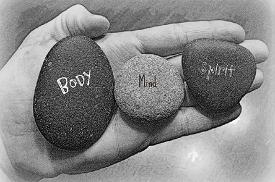 Balance and purity of body and mind are known to be among the best
defenses against disease. Meditation and other methods of yoga are important
contributors. You could say that good health is a coincident benefit of
long-term meditation practice, a foundation upon which we are building a much
greater thing - enlightenment.
Balance and purity of body and mind are known to be among the best
defenses against disease. Meditation and other methods of yoga are important
contributors. You could say that good health is a coincident benefit of
long-term meditation practice, a foundation upon which we are building a much
greater thing - enlightenment.